HERACLE'S TWELVE JOBS
HERACLE'S TWELVE JOBS
Graphic novel, Printmaking
2026
Who says comics only belong on paper?
At the end of 2025, I attended an MDI Talk at the UPV (Univeristat Politècnica de València, Spain) presented by Álvaro Pons, titled "A (Quick) History of Comics." It discussed how comics have existed for longer than we think, since their definition is: a story told through a sequence of images or panels, which may or may not be accompanied by text.
With this in mind, a cave painting can be considered a comic because it has a sequential structure. And what about the amphorae on which the Greeks narrated their myths? Absolutely.
This universitary project, created for a printing techniques course, consists of the sequential narration of the twelve Herculean Jobs, but in this case, the panels are amphorae. The goal was to create, through this analog technique, a narration that differs from what we are used to.
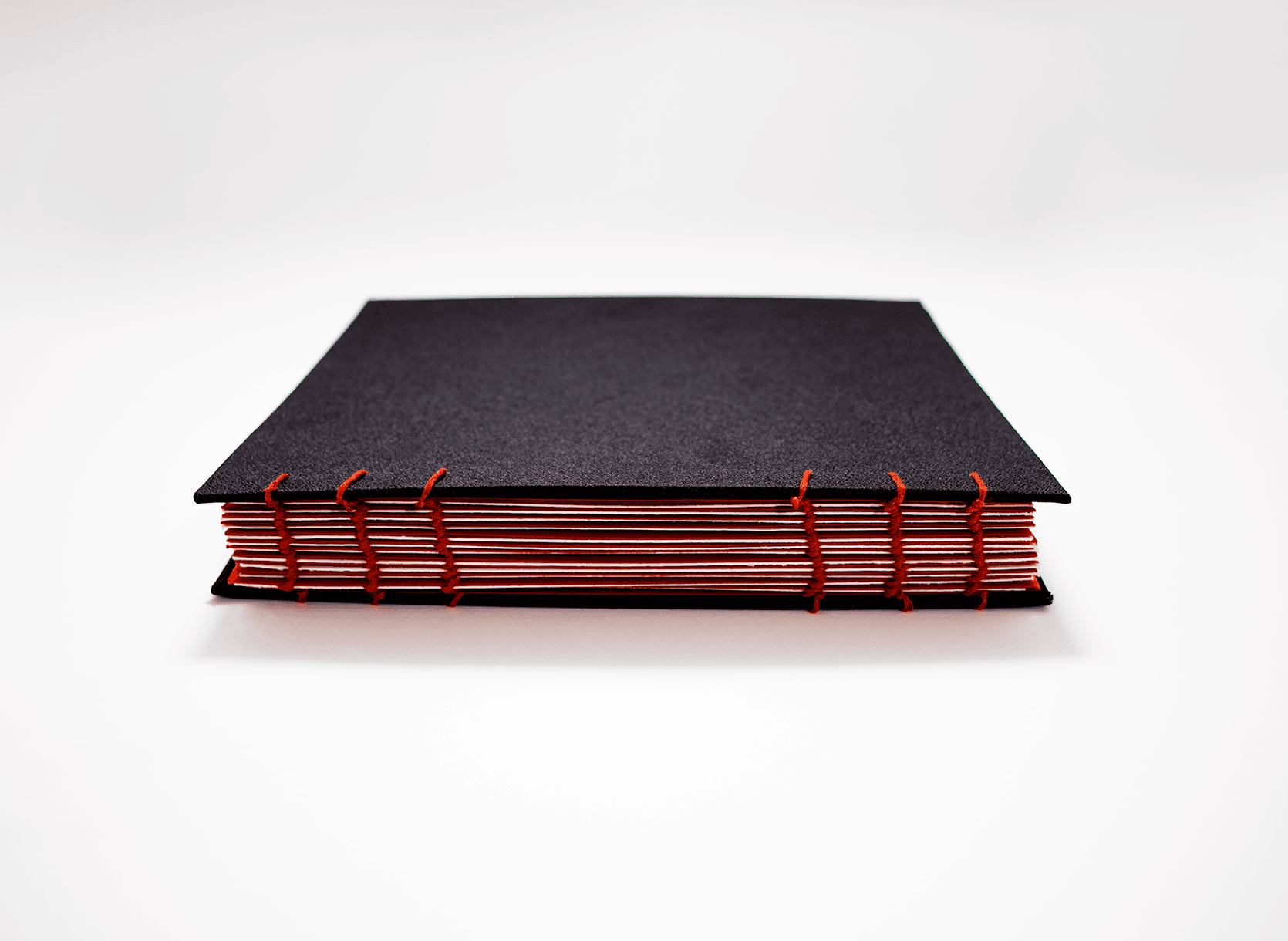
The whole book was handcrafted by me: the linocuts for the images: twelve scenes that worked as a puzzle with the top and bottom of the vases; the text composition, the creation of the covers and sewing all the parts together. It was a great oportunity to experiment with new materials and techniques and I enjoyed every part of it.
Who says comics only belong on paper?
At the end of 2025, I attended an MDI Talk at the UPV (Univeristat Politècnica de València, Spain) presented by Álvaro Pons, titled "A (Quick) History of Comics." It discussed how comics have existed for longer than we think, since their definition is: a story told through a sequence of images or panels, which may or may not be accompanied by text.
With this in mind, a cave painting can be considered a comic because it has a sequential structure. And what about the amphorae on which the Greeks narrated their myths? Absolutely.
This universitary project, created for a printing techniques course, consists of the sequential narration of the twelve Herculean Jobs, but in this case, the panels are amphorae. The goal was to create, through this analog technique, a narration that differs from what we are used to.
The whole book was handcrafted by me: the linocuts for the images: twelve scenes that worked as a puzzle with the top and bottom of the vases; the text composition, the creation of the covers and sewing all the parts together. It was a great oportunity to experiment with new materials and techniques and I enjoyed every part of it.